1

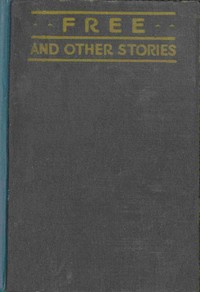
Free, and other stories — A Closer Reading
11
1
Project Gutenberg
2022
Short stories, American; United States -- Social life and customs -- 20th century -- Fiction
Readers of public-domain and historical texts
Project Gutenberg digital edition
en
Edition facts
Words: 109,514
Reading time: 477 min
Text sections: 16
Source:
Project Gutenberg record #68542
Dreiser's 1918 collection of eleven stories, including 'Free,' 'The Lost Phœbe,' and 'Nigger Jeff,' examines ambition, constraint, and social maneuvering through precise observation of domestic interiors, professional rivalries, and natural settings.
The opening story, 'Free,' establishes a pattern of psychological tension anchored in domestic space. Rufus Haymaker, an architect, sits at his Central Park West window before dawn, watching poplars in mist while his wife lies ill. Dreiser’s prose moves between the stillness of the apartment and the restless thoughts of its inhabitant, using the park view as a counterpoint to interior confinement. The physician’s whispered consultation about heart lesions and neuritis introduces a clinical vocabulary that recurs across the collection, where bodily and social ailments intertwine.
Windows and Watchers
Several stories open with a character positioned at a window or threshold, observing an exterior scene. In 'Free,' Haymaker studies the park from his armchair; in 'Old Rogaum and His Theresa,' the father watches from his doorway for his daughter’s return. These vantage points establish a dynamic of surveillance and longing. Dreiser often describes the view in precise detail—the poplars 'shrouded in a gray morning mist,' the street 'wet and glistening'—before turning inward to the observer’s anxieties. The window becomes a membrane between private thought and public life, a recurring structural device that frames the characters’ limited agency.
The Currency of Information
In 'A Story of Stories,' the reporter Binns competes with a rival, Collins, to control the narrative of a captured train robber. The excerpt reveals a sharp focus on professional tactics: note-taking, picture-making, and the timing of access to the prisoner. Dreiser renders the negotiation as a series of strategic moves, with each reporter calculating how to turn a by-product—a photograph, a first interview—into advantage. The language of exchange ('make a picture,' 'save time,' 'take him up to the News office') underscores how information functions as property. This story, like others in the collection, treats storytelling itself as a contested resource, shaped by institutional pressures and personal ambition.
Movement Between Scenes
Dreiser frequently shifts location mid-story, moving characters from domestic interiors to offices, trains, or streets. In 'Free,' the action stays largely within the apartment, but the narrative moves between Haymaker’s present vigil and his memories. In 'A Story of Stories,' the scene jumps from the train to the city, with the reporter’s anxiety about losing his scoop driving the transition. These movements are not merely scenic; they reflect the characters’ social mobility or its absence. The train journey in 'A Story of Stories' literalizes the competition for advancement, while the static apartment in 'Free' suggests entrapment. Dreiser uses these shifts to expose the gap between aspiration and circumstance.
Recurring Images of Light and Mist
Throughout the excerpts, natural phenomena—dawn light, mist, shadows—recur as markers of mood and transition. In 'Free,' the 'gray morning mist' shrouds the poplars, and later the physician speaks 'softly and affectionately' as if to soften bad news. In 'A Story of Stories,' the time of day is noted precisely ('nearly six-thirty'), and the flash-light machine suggests artificial illumination competing with natural light. These details are not decorative; they anchor the emotional temperature of scenes. Dreiser’s descriptions of weather and time of day often precede a character’s realization or decision, linking the external environment to internal states without explicit commentary.
Voice and Indirect Speech
Dreiser frequently renders characters’ thoughts through free indirect discourse, blending third-person narration with the character’s own idiom. In 'Free,' Haymaker notes 'the heart, Mr. Haymaker had time to note ironically,' merging the narrator’s report with the character’s sardonic reflection. In 'A Story of Stories,' Binns’s irritation is conveyed through phrases like 'No, no, no!' and 'I know what you want,' which mimic spoken protest while remaining within the narrative voice. This technique allows Dreiser to present subjective experience without first-person confession, maintaining a detached yet intimate tone. It also creates a layered texture where the reader perceives both the character’s self-justification and the narrator’s implied judgment.
Readers attentive to Dreiser’s handling of space and time will notice how often a story’s turning point coincides with a change in setting or a shift in light. The collection rewards those who track the recurrence of windows, journeys, and the precise hour of day. These structural choices, rather than plot alone, shape the emotional arc of each story.
Reader reflection
How did this book work for you?
Your answers remain private and are stored only in this browser.
Your progress
0
/
10
2
What was your overall reaction to the book?
3
Would you recommend this book to another reader?
4
How easy was the book to follow?
5
What did you think about the pace?
6
How understandable was the text?
7
Did any part of the book feel personally relevant?
8
How would you rate its originality?
9
What changed or sharpened your thinking?
10