
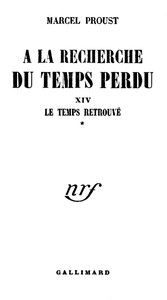
Le temps retrouvé Tome 1 (de 2) : À la recherche du temps perdu vol.VII by Proust
We catch up with Marcel many years after the main events of In Search of Lost Time. He's middle-aged, disillusioned, and convinced he has wasted his life. He's withdrawn from the glittering Parisian society he once chronicled so carefully. The world has changed dramatically with World War I, and so have the people he knew. He attends a final series of social gatherings, where he witnesses the shocking effects of time on his old acquaintances—aging, illness, and faded glory are everywhere.
The Story
This isn't a plot-driven book in the usual sense. It's more about a man taking stock. Marcel moves through a world ravaged by time and war, attending parties that feel like ghostly echoes of the past. He sees the once-glamorous Duchess de Guermantes now an old woman, his former love Albertine long gone, and friends altered beyond recognition. These encounters plunge him into deep reflection. He grapples with a sense of failure, believing he has done nothing of value. But then, something shifts. Through a few simple, accidental moments—like tripping on a uneven paving stone—he is suddenly flooded with involuntary memories. These aren't just recollections; they are full-body experiences of past joy. In these flashes, he finds the answer he's been searching for: his purpose is to capture these very moments, these essences of lived experience, in a work of art. The book becomes his plan to write the very novel we have just finished reading.
Why You Should Read It
Reading this feels like having a long, profound conversation with a brilliantly observant friend about life itself. Proust articulates feelings we all have but struggle to name—that nagging sense of time slipping away, the weirdness of seeing people age, and the way a smell or sound can rocket you back decades. His central idea is a gift: that our past isn't lost. It's locked inside us, waiting to be rediscovered, and that recovering it through art is the highest calling. It’s incredibly comforting and energizing. While the sentences are famously long, they pull you into a unique rhythm of thought that’s surprisingly absorbing.
Final Verdict
This is for the patient reader and the thoughtful soul. It's perfect for anyone who has ever kept a journal, wondered about the nature of memory, or felt a bittersweet ache about the passage of time. You don't have to be a literary scholar; you just need a bit of curiosity about the human heart. It's the ultimate payoff for sticking with Proust's masterpiece, offering a conclusion that reframes everything that came before. It argues, beautifully, that no experience is ever wasted if you learn how to look at it.
This text is dedicated to the public domain. Use this text in your own projects freely.
Jessica Hernandez
2 years agoHaving followed this topic for years, I can say that the structural organization allows for quick referencing of key points. Definitely a five-star contribution to the field.
Margaret Williams
8 months agoFrom a researcher's perspective, the inclusion of diverse viewpoints strengthens the overall narrative. I'll be recommending this to my students and colleagues alike.

Michael Thompson
1 year agoI took detailed notes while reading through the chapters and the logic behind each conclusion is easy to follow and verify. This exceeded my expectations in almost every way.