1

"Short Sixes": Stories to be Read While the Candle Burns — Themes and Context
3
0
Project Gutenberg
2014
Short stories, American; United States -- Social life and customs -- 19th century -- Fiction
Readers of public-domain and historical texts
Project Gutenberg digital edition
en
Edition facts
Words: 48,908
Reading time: 213 min
Text sections: 8
Source:
Project Gutenberg record #47405
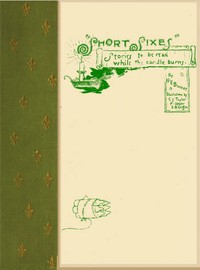
H. C. Bunner's 1891 collection of short stories, illustrated by C. Jay Taylor, F. Opper, and S. B. Griffin, offers glimpses into late-19th-century American social life through tales of romance, misunderstanding, and domestic comedy, as seen in excerpts from 'The Tenor' and 'The Nice People.'
Editorial Edition Score
4.7/5
★★★★★
★★★★★
Calculated from edition completeness, EPUB availability, text structure and catalogue metadata. Not a user rating.
Edition quality
Bunner's collection opens with 'The Tenor,' set in a dim, quiet room in an old New York house, where two young girls await a performance. The narrator lingers on domestic details—rose-bushes bundled in straw ulsters, a dainty white bed draped with lace—establishing a tone of cozy, observant realism. The catalog subjects promise stories of American social life and customs, and the excerpts deliver precisely that: a world of courtship, family negotiations, and the small misunderstandings that drive comedy.
Domestic Settings and Social Codes
The excerpts reveal a consistent attention to the physical spaces of middle-class life. In 'The Tenor,' the room is described as 'ample, yet it had a cosy air,' with dark hangings and a carven cabinet. This setting is not mere backdrop; it signals the characters' social standing and the rituals of courtship. Similarly, in 'The Nice People,' a married couple's disagreement over the number of children their new acquaintances have—'Three, he told me' versus 'Two, she said'—unfolds as a comedy of manners rooted in the social obligation to remember such details. The stories use these domestic arenas to explore the unspoken rules governing behavior, from the proper way to receive a caller to the delicate art of correcting one's spouse.
Dialogue as a Driver of Plot
Bunner relies heavily on dialogue to advance his narratives. In 'The Tenor,' the conversation between the two girls is filled with exclamations and interruptions, capturing the breathless excitement of youth. The later excerpt from 'A Round-Up' features a rapid-fire exchange between Dick Cutter and Miss Euphrosyne, where Dick's emphatic declarations—'No! It ain't Clytie, nor it ain't Aurora'—propel the proposal scene. The dialogue is marked by colloquialisms and rhythmic repetition, giving each character a distinct voice. The catalog subject 'Short stories, American' is borne out by this vernacular energy, which feels rooted in the speech patterns of the period.
Illustrations and the Reading Experience
The title page lists three illustrators—C. Jay Taylor, F. Opper, and S. B. Griffin—and the excerpts include captions for illustrations, such as 'I kill hare! give me my knife—give me my rivvolvare!' from 'The Tenor.' These images are integral to the book's design, offering visual interpretations of key moments. The catalog does not detail the illustrations' content, but their presence suggests a publication aimed at a broad audience, where pictures complemented the text. Readers of this digital edition may miss the original artwork, but the captions hint at the comic or dramatic scenes the illustrators chose to highlight.
These excerpts represent only a fraction of the collection's sixteen stories. Readers should expect a mix of romantic comedy, social satire, and perhaps the occasional melodrama, all rendered in Bunner's observant prose. The catalog subjects provide a reliable frame, but the stories themselves will reveal the specific customs and concerns of 1890s America, from the anxieties of unmarried women to the etiquette of summer vacations.
Reader reflection
Before you leave, reflect on the book
Use these questions to collect your thoughts before moving on.
Your progress
0
/
10
2
What was your overall reaction to the book?
3
Would you pass this book on to a friend?
4
How demanding did the text feel?
5
Could you follow the author’s main argument?
6
Did any part of the book stay with you emotionally?
7
Which aspect of the book did you value most?
8
Would you like to discuss this book with someone?
9
What changed or sharpened your thinking?
10