1

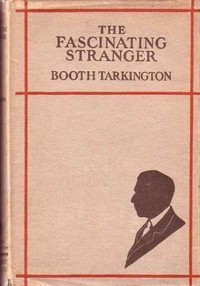
The Fascinating Stranger, and Other Stories — Background and Themes
9
1
Project Gutenberg
2019
Short stories, American; United States -- Social life and customs -- 20th century -- Fiction
Readers of public-domain and historical texts
Project Gutenberg digital edition
en
Edition facts
Words: 104,926
Reading time: 457 min
Text sections: 12
Source:
Project Gutenberg record #60529
Booth Tarkington's 1923 collection of twelve stories, including the title tale of a homeless man sleeping in a limousine, explores early 20th-century American social manners and family dynamics through ironic narration and sharp dialogue.
Editorial Edition Score
4.8/5
★★★★★
★★★★★
Calculated from edition completeness, EPUB availability, text structure and catalogue metadata. Not a user rating.
Edition quality
The title story opens with a homeless man, George Tuttle, waking in a limousine he claims as his bedroom, setting a tone of ironic social observation. Tarkington's narration immediately questions ownership—'after thousands of years of wrangling, economists still murder one another to emphasize varying ideas of what constitutes the ownership of anything'—framing the collection's interest in class and property. The excerpts show a writer attentive to gesture and speech: a child's rudeness to a guest, a mother's condescending laugh, and a thunderstorm that sends characters scrambling for insulation. These details suggest stories built around domestic tensions and unspoken rules.
Narrative Voice and Social Irony
The opening of 'The Fascinating Stranger' uses a detached, philosophical narrator who undercuts the protagonist's pretensions. Tarkington describes Tuttle's tear and murmur of 'Oh, Gosh!' with mock solemnity, then digresses into a wry meditation on property. This voice recurs in other excerpts: when a father fails to understand his son's rudeness, the narrator notes the parents see it 'as an effect detached from cause; therefore inexplicable.' Such commentary aligns with the catalog subject of social life and customs, but the excerpts reveal a sharper, more ironic edge than a simple period portrait.
Children as Social Barometers
In the story excerpt featuring Ludlum, a child's behavior exposes adult hypocrisies. Ludlum insults a visitor's weight, then is placated by a mysterious explanation about handkerchiefs. The parents are baffled, but the visitor understands the boy's unspoken logic. Tarkington writes, 'Children can’t tell their reasons, but they’ve always got ’em!' This moment, along with the mother's fear of lightning and her elaborate 'insulation' with drinking glasses, shows how children and their fears or bluntness reveal the anxieties beneath polite surfaces. The catalog subject 'United States -- Social life and customs' is thus rendered through family friction rather than broad social panorama.
Setting and Sensory Detail
The excerpts are rich with specific, sensory details that ground the stories in a particular time and place: a limousine filled with shavings, a garden of 'pink-speckled blossoms,' poplars showing 'silver sides' in the wind, and a drawing-room with gilt chairs and flat-bottomed glasses used as insulators. Tarkington uses weather—a thunderstorm that drives characters indoors—to heighten domestic drama. The catalog subject 'Short stories, American' is evident in these localized settings, but the excerpts show a preference for interior spaces (limousine, porch, drawing-room) where social rules are tested. The physical world is never merely decorative; it often mirrors characters' emotional states.
Readers approaching this collection should attend to Tarkington's narrative asides and the gaps between what characters say and what they mean. The stories reward attention to small gestures—a tear, a laugh, a shift in seating—that carry more weight than the plot summaries suggest. The excerpts offer only fragments of twelve stories, so the full range of voices and situations remains to be discovered.
Reader reflection
What did you think of this book?
Answer a few questions and save a private reflection on this device.
Your progress
0
/
10
2
What was your overall reaction to the book?
3
Would you encourage someone else to read it?
4
What was the reading difficulty like?
5
Is this a title worth rereading?
6
How distinctive were its ideas or approach?
7
How useful did the reading feel?
8
Did any part of the book feel personally relevant?
9
What changed or sharpened your thinking?
10