
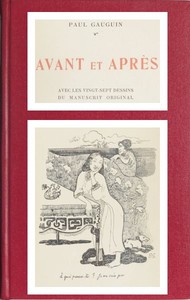
Avant et Après by Paul Gauguin
Let's be clear: 'Avant et Après' is not a novel. It doesn't have a plot in the traditional sense. Think of it as a scrapbook of a mind in its final years. Gauguin wrote it in 1903, just months before he died, in his hut on the remote Marquesas island of Hiva Oa.
The Story
The 'story' is Gauguin's stream of consciousness. He jumps from topic to topic. One minute he's recounting a bitter argument with a local bishop over his lifestyle. The next, he's sharing a haunting, intimate memory of his time with Vincent van Gogh in Arles, including his version of the infamous ear incident. He critiques other artists, mocks European society, and lays out his artistic philosophy. He defends the Indigenous culture he lived among while also revealing his own problematic and colonialist attitudes. It's a chaotic mix of confession, manifesto, and grievance list. There's no hero's journey here—just a complex, dying man trying to make sense of his choices and his legacy.
Why You Should Read It
I picked this up for the art history, but I stayed for the brutal honesty. This book shatters the romantic 'noble savage' myth that sometimes surrounds Gauguin. You see the artist's genius in his passionate arguments for color and feeling over realism. But you also see his profound arrogance, his racism, and his selfishness. It's a deeply uncomfortable read at times, and that's the point. It doesn't let you admire the art without confronting the man. Reading it feels like being stuck in a room with a brilliant, irascible, and deeply troubled uncle who won't stop talking. You won't always like what he says, but you can't look away.
Final Verdict
This is not a beach read. It's for anyone who loves art history but is tired of sanitized biographies. It's perfect for readers who are okay with ambiguity and don't need a likable narrator. If you've ever wondered about the messy human behind a famous masterpiece, this is your backstage pass. Pair it with a book of his paintings—the contrast between the vibrant, idealized art and the grim, conflicted words is the real story.
No rights are reserved for this publication. Enjoy reading and sharing without restrictions.
Paul Lopez
1 month agoAfter a thorough walkthrough of the table of contents, the nuanced approach to the central theme was better than I expected. A trustworthy resource that I'll keep in my digital library.
Patricia Brown
1 year agoExtremely helpful for my current research project.
Michael Lee
2 months agoThought-provoking and well-organized content.
Patricia Gonzalez
2 months agoFast paced, good book.


Susan Brown
5 months agoIt’s refreshing to see such a high standard of digital publishing.