1

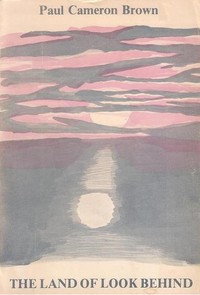
The Land of Look Behind — Key Ideas to Explore
9
1
Project Gutenberg
2010
Fiction; Short stories, Canadian
Readers of public-domain and historical texts
Project Gutenberg digital edition
en
Edition facts
Words: 21,932
Reading time: 96 min
Text sections: 3
Source:
Project Gutenberg record #30874
A collection of short stories, satires, beast fables, and texts that explore perception, creation, and the tension between experience and imagination, framed by a foreword that likens the book to a rear-view mirror.
Editorial Edition Score
4.5/5
★★★★★
★★★★★
Calculated from edition completeness, EPUB availability, text structure and catalogue metadata. Not a user rating.
Edition quality
The foreword to The Land of Look Behind announces the book as a kind of rear-view mirror, aiming to reveal inner dimensions while transporting what lies beyond. The author, Paul Cameron Brown, describes a mix of genres—short stories, satires, beast fables, and single-page texts—that mingle casually. He notes that Indian myths in the collection are entirely his own, an attempt to visualize creation through alien perspectives. The prose pieces, he says, reflect a mirror world where the gazer chances upon reality with a new breath of perception. Bewilderment with the natural world is a keynote, and the book explores what Brown calls the terrible algebra of our existences.
A Foreword That Sets the Terms
The foreword is not a mere preface; it establishes the book's conceptual framework. Brown explicitly states his intent to use a rear-view mirror metaphor, cocked to reveal innermost dimensions. He categorizes the contents as short stories, satires, beast fables, and texts, but insists they speak as a unit. The mention of oral myths as Canada's indigenous literature and his use of the spoken ballad form signals a deliberate engagement with narrative tradition. The phrase terrible algebra of our existences appears early, giving a philosophical weight that recurs in the excerpts. This opening shapes expectations for a work that is self-aware about its own form and purpose.
The Wager: Argument as Plot Engine
In the excerpt from The Wager, two characters debate the primacy of experience over imagination, proposing a bibliographical survey to locate the Muse. The dialogue is dense with abstract terms—locus, eclecticism, hiatus—and the argument escalates into a Faustian wager: the loser must swear off writing for three months. The scene is less about plot than about the process of intellectual sparring. The narrator reflects that words, like snow, reign as queen of the elements for an appointed time, then pass away. This passage reveals a narrative voice that treats conversation as a vehicle for philosophical inquiry, with the setting (snow, galoshes) providing a concrete counterpoint to the abstract debate.
Errands: A Shift in Tone and Setting
Errands opens with a Republican proclamation and a dog's baying, immediately establishing a different register—political, ominous, grounded in Northern Ireland. The protagonist, Sean Paddy MacGuire, is defined by his Catholic heritage and the pressure to embrace Republican ideology. The prose is more direct than in The Wager, with shorter sentences and sensory details (damp night, searing iron). The dog's cry is described as implanting sound upon human ears, a phrase that echoes the foreword's interest in perception. This story contrasts sharply with the earlier excerpt's abstract dialogue, showing the collection's range from philosophical debate to tense, politically charged narrative.
Readers should approach The Land of Look Behind as a deliberately mixed collection, where the foreword's framing is essential to understanding the whole. The excerpts show a writer who moves between intellectual argument and stark realism, often within the same piece. Pay attention to how Brown uses setting—a snowy exit, a damp night—to anchor abstract ideas. The book rewards attention to its shifts in pace and voice, from the rapid-fire debate of The Wager to the brooding atmosphere of Errands.
Reader reflection
How will you remember this book?
Save your reaction, strongest insight, and memorable passage.
Your progress
0
/
10
2
Was reading this book enjoyable?
3
Would you recommend this book to another reader?
4
How demanding did the text feel?
5
Did this book create an emotional response?
6
Did the book deliver what you hoped for?
7
Would this book work well in a reading group?
8
How distinctive were its ideas or approach?
9
What did this book teach you most?
10
![Cover of Seven Men [Excerpts] — Background and Themes](https://eqopi.com/storage/media/covers/pg1306.jpg)
![Cover of Back to back [Night watches, Part 1.] — Key Ideas to Explore](https://eqopi.com/storage/media/covers/pg12151.jpg)
![Cover of The unknown [Night watches, Part 7.] — Story, Setting & Ideas](https://eqopi.com/storage/media/covers/pg12157.jpg)