
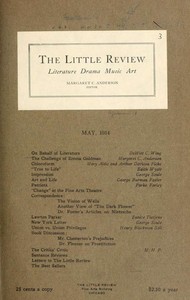
The Little Review, May 1914 (Vol. 1., No. 3) by Various
Forget thinking of this as a 'book' in the normal sense. 'The Little Review, May 1914' is a snapshot, a single edition of a radical little magazine that acted as a lightning rod for the avant-garde. There's no linear plot, but there is a powerful narrative: the story of art pushing against its limits. The 'characters' are the contributors—voices like Ezra Pound, who served as the magazine's foreign editor, and a host of other writers and poets. The 'conflict' is their shared struggle against stale, Victorian-style writing. They fill these pages with sharp criticism, intensely focused 'Imagist' poems that try to capture a single, clear picture, and translations meant to introduce new ideas from Europe.
The Story
Imagine opening a magazine and finding no ads, no fluff—just raw, unfiltered artistic ambition. That's this. The issue is a collection of works united by a desire to break the mold. Ezra Pound argues fiercely for new standards in poetry and criticism. Poems by writers like Richard Aldington use sparse, precise language to make you see the world differently. There are also essays and literary pieces that challenge the reader to think harder and feel more deeply. It's less of a story you follow and more of an atmosphere you step into—one charged with the excitement of invention.
Why You Should Read It
I love this because it removes the textbook filter. You're not reading about Modernism; you're reading Modernism as it was being made. There's an incredible urgency and a touch of naivety—these writers didn't know they'd become 'the classics.' They were just fighting for the art they believed in. Reading Pound's demanding editorials or a stark, beautiful Imagist poem feels immediate. It connects you directly to the creative ferment of that specific spring, just months before World War I would shatter the world these artists were trying to rebuild with words.
Final Verdict
This is perfect for history buffs who want to go beyond dates and facts, for poetry lovers curious about where modern verse really started, and for any reader who enjoys the thrill of discovering something old that still feels daringly new. It’s not a casual beach read; it’s an experience. You read it to feel the crackle of artistic rebellion in the air, to time-travel back to a single, pivotal moment on the page.
This book is widely considered to be in the public domain. You are welcome to share this with anyone.
Edward Jackson
3 months agoI started reading out of curiosity and the pacing is just right, keeping you engaged. This story will stay with me.
Lucas Williams
1 year agoSolid story.
Donna Hill
1 year agoI didn't expect much, but the storytelling feels authentic and emotionally grounded. A true masterpiece.
Kevin Anderson
9 months agoSolid story.



George Brown
3 months agoUnlike many other resources I've purchased before, the author’s unique perspective adds a fresh layer to the discussion. I'll be citing this in my upcoming project.