1

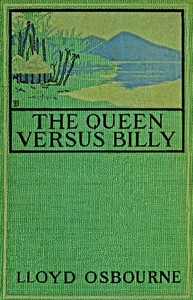
The Queen Versus Billy, and Other Stories — Key Ideas to Explore
9
1
Project Gutenberg
2020
Short stories, American; Oceania -- Fiction
Readers of public-domain and historical texts
Project Gutenberg digital edition
en
Edition facts
Words: 83,808
Reading time: 365 min
Text sections: 12
Source:
Project Gutenberg record #62875
Lloyd Osbourne's 1900 collection of ten stories set across Oceania, blending colonial adventure with moral ambiguity. The title story follows Captain Casement's punitive expedition in the Solomons; others feature missionaries, traders, and islanders in tense encounters. Osbourne's prose shifts between brisk reportage and intimate interiority, often undercutting heroic expectations.
Editorial Edition Score
4.8/5
★★★★★
★★★★★
Calculated from edition completeness, EPUB availability, text structure and catalogue metadata. Not a user rating.
Edition quality
The opening story, “The Queen Versus Billy,” begins not with a courtroom but with a ship—the Sandfly bringing news of a murder to Sydney. Osbourne immediately establishes a tone of bureaucratic violence: the victim is reduced to a ledger entry (“Thomas Hysslop Biggar, commonly known as ‘Captain Tom’; aged forty-six; British subject; occupation, trader in coprah”). The prose is clipped, almost official, yet the accumulation of names and dates (Collins in 1884, Casseroles in 1887) creates a rhythm of escalating tension. This is a world where death is routine, and the narrator’s cool detachment becomes itself a kind of commentary.
Voice and the Weight of Official Language
Osbourne frequently adopts a documentary tone, listing facts as if compiling a report. In “The Queen Versus Billy,” the murder notice reads like a police file: “murdered by the natives in September, 1888, between the 7th and the 24th.” This precision contrasts with the moral murk of the events. The narrator notes that punitive actions often “mangling their wives and children in a way horrible to think of,” yet the sentence is tucked inside a subordinate clause, almost an afterthought. The effect is unsettling—the reader is forced to sit with the horror that the prose itself tries to contain.
Shifts in Pace: From Report to Drama
Osbourne’s pacing is deliberately uneven. In “Father Zosimus,” the narrative slows to a crawl inside a sickroom: “Mrs. Cook lay in disordered bedclothes, her glassy eyes upturned in delirium.” The description is clinical, almost static. Then, abruptly, the scene cuts to a council of chiefs, where dialogue crackles with tension. The priest’s demand—“We will take his boat by force”—is met with the repeated refrain “It is Ngau’s boat,” a verbal standoff that mimics the stalled action. Osbourne uses such rhythmic repetition to heighten drama, then releases it in a burst of direct speech.
Setting as a Character: The Pacific as Pressure Cooker
The islands are never merely backdrop. In “The Queen Versus Billy,” the Solomons are described as “inhospitable,” where “if the climate does not kill you the black man soon will.” The weather in “Father Zosimus” is a constant threat: “the wail of the wind without” and “breakers that were thundering against their iron coast.” Osbourne uses natural forces to compress time and force decisions. The storm is not just atmosphere; it is the mechanism that drives the plot toward its moral crisis. The sea, the heat, the isolation—these are the real antagonists, more relentless than any human foe.
Readers should attend to Osbourne’s use of indirect discourse, where characters’ thoughts bleed into the narration without quotation marks. This technique blurs the line between observer and participant, especially in moments of crisis. The stories reward careful attention to what is left unsaid—the gaps in official reports, the silences between speeches. Osbourne’s Pacific is a place where language itself is a tool of power, and the most telling details are often the ones that slip through the cracks of the record.
Reader reflection
Your personal reading reflection
Build a private reading journal entry for this title.
Your progress
0
/
10
2
Was reading this book enjoyable?
3
Is this a title you would suggest to others?
4
Did the language feel accessible?
5
Did you relate to its people, ideas, or situations?
6
How useful were the ideas in this book?
7
How clearly were the main ideas presented?
8
Did this book create an emotional response?
9
What is the main idea you are taking away?
10
![Cover of Seven Men [Excerpts] — Background and Themes](https://eqopi.com/storage/media/covers/pg1306.jpg)

![Cover of Back to back [Night watches, Part 1.] — Key Ideas to Explore](https://eqopi.com/storage/media/covers/pg12151.jpg)
![Cover of The unknown [Night watches, Part 7.] — Story, Setting & Ideas](https://eqopi.com/storage/media/covers/pg12157.jpg)