
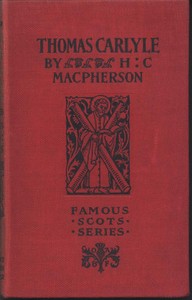
Thomas Carlyle by Hector Macpherson
Hector Macpherson's biography of Thomas Carlyle is like being given a backstage pass to one of the most forceful minds of the 19th century. It follows Carlyle's journey from his humble beginnings in rural Scotland to his reign as London's most intimidating literary lion. We see his struggle to find his voice, his explosive success with works like The French Revolution, and his complicated, often difficult relationships with everyone from his long-suffering wife Jane to fellow giants like Charles Dickens.
The Story
Macpherson lays out Carlyle's life in a clear, narrative way. He shows us the young man battling doubt and poverty, finding his power in writing. We get the dramatic story of the burned manuscript of The French Revolution and his determination to rewrite it. The book traces his rise to fame, his shifting ideas about society, leadership, and history, and his later years as a revered but increasingly bitter prophet. It's not just a list of dates and publications; it's the story of a personality so strong it bent the world around it.
Why You Should Read It
What makes this book stick with you is how Macpherson handles Carlyle's flaws. He doesn't make excuses for the man's famously grumpy and demanding nature, especially at home. Instead, he shows how that personal storm was inseparable from the powerful, critical energy in his writing. You come away understanding that Carlyle's rage against the growing industrial, democratic age wasn't just philosophical—it was deeply personal. Reading this feels like getting the full, unvarnished picture. You admire the intellect and the sheer force of will, even as you wince at the behavior. It makes a historical figure feel startlingly real and human.
Final Verdict
This is a perfect read for anyone curious about the personalities behind big ideas. It's for people who enjoy biographies that read like character studies, and for readers who want to understand the 19th century beyond just the kings and battles—through the minds that shaped its thought. While you might want some basic familiarity with the Victorian era, Macpherson's style is welcoming. You don't have to agree with Carlyle to be fascinated by him. If you've ever enjoyed a biography that makes you think, 'Wow, what a complicated person,' then this portrait of the Sage of Chelsea is for you.
This digital edition is based on a public domain text. It is available for public use and education.
George Martinez
4 months agoThought-provoking and well-organized content.



Christopher Johnson
1 year agoThis digital copy caught my eye due to its reputation, the objective evaluation of the pros and cons is very refreshing. Highly recommended for those seeking credible information.