1

The Little Room, and Other Stories — Themes and Context
10
1
Project Gutenberg
2019
Short stories, American; American fiction -- 19th century
Readers of public-domain and historical texts
Project Gutenberg digital edition
en
Edition facts
Words: 23,737
Reading time: 104 min
Text sections: 10
Source:
Project Gutenberg record #58855
Madeline Yale Wynne's collection blends domestic realism with the uncanny, as in the title story where a Vermont farmhouse room appears and disappears. The author's own illustrations accompany tales of ghosts, creative anxiety, and family secrets, marked by sharp dialogue and precise observation of New England character.
Editorial Edition Score
4.8/5
★★★★★
★★★★★
Calculated from edition completeness, EPUB availability, text structure and catalogue metadata. Not a user rating.
Edition quality
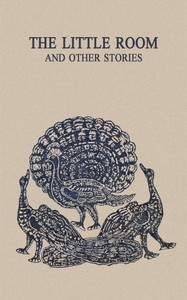
The title story of Madeline Yale Wynne's 1895 collection opens with a newlywed couple on a train, rehearsing a family mystery. The wife warns her husband that her aunts are “New England—Vermont New England—boiled down,” a phrase that signals the collection's blend of regional character and domestic tension. The little room of the title is a farmhouse chamber that sometimes exists and sometimes does not, a puzzle that has troubled the family for generations. Wynne, who also designed the book's decorations, writes with a precise ear for dialogue and a taste for the uncanny that never quite leaves the realm of everyday life.
A Room That Refuses to Stay Put
The central conceit of “The Little Room” is a space that cannot be reliably found. The narrator's mother, as a child, slept in a room with blue chintz curtains and a sea-captain's portrait; later visitors find only a blank wall. The aunts, Hannah and Maria, offer contradictory accounts—one insists the room never existed, the other that it was walled up. Wynne never resolves the mystery, instead letting the uncertainty accumulate across generations. The story's power lies in its restraint: the supernatural is suggested but never confirmed, and the family's matter-of-fact acceptance of the anomaly is more unsettling than any ghost. The dialogue captures the aunts' laconic stubbornness, as when one aunt responds to a question about the room with “I don't know as I ever heard of any little room.”
The Author and His Anxious Muse
“My Ghost of a Chance” personifies creative desperation as a small, bald specter that grows fat on the author's despair. The story tracks the writer's cycle of procrastination and panic: he wakes to find his ghostly chance “limp and almost like a lifeless thing,” then revives it by writing—only to despise what he produces. Wynne's satire is sharp: the ghost struts “like a little king” while the author knows his work is trash. The piece is structured as a mock-heroic clock-watching sequence, with the ghost's condition worsening by the hour. It offers a wry, self-aware commentary on the pressures of literary production, and the author's final rebellion—threatening to burn his words—suggests a fraught relationship with the very idea of a “chance.”
Domestic Details and Regional Texture
Across the collection, Wynne grounds her fantastic premises in concrete, regional detail. The aunts in “The Little Room” are “simply workers,” and the narrator compares them to a Maine woman who wanted her epitaph to read “She was a hard working woman.” The farmhouse is isolated, “almost a mile away from any neighbors,” and the bound servant Hiram “went with the farm, 'long o' the critters.” These details root the uncanny in a specific New England landscape of thrift, duty, and suppressed emotion. Even the ghost story is told against a backdrop of train travel and domestic negotiation. Wynne's own illustrations, mentioned in the copyright notice, likely extended this attention to material culture. The result is a collection where the strange emerges not from Gothic castles but from the familiar textures of calico, chintz, and Saturday-night housework.
Readers may find it useful to approach these stories as studies in uncertainty rather than puzzles to be solved. Wynne's interest lies less in explaining the inexplicable than in tracing how people live alongside it—how families absorb anomalies into their routines, and how artists bargain with their own inspiration. The collection rewards attention to its small, telling details: a phrase repeated, a room misremembered, a ghost that thrives on failure.
Reader reflection
What did you think of this book?
Answer a few questions and save a private reflection on this device.
Your progress
0
/
10
2
What was your overall reaction to the book?
3
Would you pass this book on to a friend?
4
How much effort did this book require?
5
Did you relate to its people, ideas, or situations?
6
How strongly did the book affect you emotionally?
7
What did you think about the pace?
8
What was the strongest part of the book?
9
Which lesson or insight stayed with you?
10
![Cover of Seven Men [Excerpts] — Background and Themes](https://eqopi.com/storage/media/covers/pg1306.jpg)

![Cover of Back to back [Night watches, Part 1.] — Key Ideas to Explore](https://eqopi.com/storage/media/covers/pg12151.jpg)
![Cover of The unknown [Night watches, Part 7.] — Story, Setting & Ideas](https://eqopi.com/storage/media/covers/pg12157.jpg)