1

Too old to fly — Themes and Context
20
3
Project Gutenberg
2025
Short stories; World War, 1914-1918 -- Aerial operations, American -- Fiction
Readers of public-domain and historical texts
Project Gutenberg digital edition
en
Edition facts
Words: 8,865
Reading time: 39 min
Text sections: 1
Source:
Project Gutenberg record #76617
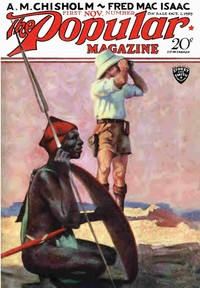
In this 1929 pulp story, Sergeant Horatio Galladay, a veteran machine gunner from the Spanish-American War and numerous colonial campaigns, faces aerial combat in World War I. The narrative contrasts his jungle-honed, irreverent expertise with the formal training of younger pilots, culminating in a desperate dogfight where his aged body and fierce will are tested.
Editorial Edition Score
4.4/5
★★★★★
★★★★★
Calculated from edition completeness, EPUB availability, text structure and catalogue metadata. Not a user rating.
Edition quality
Sergeant Horatio Galladay learned to shoot a machine gun “from the rear end of a mule”—a phrase that immediately sets the tone for Ivan March’s 1929 story. The narrator frames Galladay’s military education as a series of brutal, informal lessons: a grammar school in the Spanish-American War with a Gatling gun, a high school in the Philippines, and a college degree in “Bushwhacking.” This irreverent catalog of campaigns—Haiti, San Domingo, Nicaragua, China—establishes a voice that is both admiring and wry, treating violence as a craft perfected through improvisation and survival.
A Curriculum of Violence
The story opens by rejecting formal training. Galladay’s knowledge of “projectory, windage, recoil and assemblage” was not learned in lecture rooms but in the “jungles and brush of ‘spiggoty land.’” March uses a mock-educational structure: the sergeant’s diploma is a Navy Cross, his chevrons, and a letter praising his diligence “upon the pursuit of his studies—and the enemy.” The humor is dark; his postgraduate work includes “a marvelous knowledge of malaria fever, native liquor and man-eating insects.” This framing does more than introduce a character—it establishes a value system where experience, however bloody, outweighs theory. The reader is invited to admire a man whose expertise is written on his body: bullet wounds, a flattened nose from a mule’s kick, and scars from a Moro chieftain’s bolo knife.
The Old Sergeant’s Body
Galladay’s physicality is central to the story’s tension. He is described as “battle-scarred,” with legs “bowed by the weight of the guns.” In the cockpit, his age becomes a liability: he is “stricken with buck fever like the rawest recruit.” Yet his body also holds a promise—to a “yellow-haired girl” to bring her man back safe. The narrative dwells on his sensations: the ache of old wounds, the vibration of the double Lewises, the sting of a fresh bullet. When he screams “Damn you! Damn you!” at a German pilot, the rage is physical, almost animal. March contrasts the mechanical precision of aerial combat with Galladay’s visceral, trembling response. His marksmanship fails him at first; bullets go wild. The story does not present him as invincible but as a man fighting his own decay.
The Sound of the Guns
Sound dominates the action. The machine guns “jabber staccato death”; tracer bullets “streak upward.” March repeats the onomatopoeic “Rat—tat—tat—tat!” to anchor the reader in the gunner’s sensory world. The German planes are silent until they fire, but Galladay’s weapons are vocal, almost sentient. He “crooned to his gun” in earlier campaigns; in the climax, the double Lewises “jabbered” as if answering his curses. This auditory focus creates a claustrophobic cockpit where the only communication is through violence. When Buck Weaver’s voice fades—“I’m going—going——”—the silence is broken only by gunfire. The story’s structure mirrors this: long paragraphs of interior monologue punctuated by bursts of action. The final image of the pilotless plane nosing over into a dive leaves the reader with the echo of Galladay’s shouted challenge: “Bring on your whole damned air force!”
Readers should attend to the story’s deliberate anachronisms: Galladay’s skills belong to a colonial past, yet he is thrust into the industrial slaughter of 1918. The narrative never resolves whether his experience is an asset or a liability. Pay attention to how March uses the airplane—a modern machine—as a stage for a very old kind of combat, where a man’s worth is measured by his ability to keep firing as his body fails. The ending is abrupt; the fate of both men is left uncertain, a silence that echoes the story’s central question about what it means to be “too old to fly.”
Reader reflection
Your personal reading reflection
Build a private reading journal entry for this title.
Your progress
0
/
10
2
What was your overall reaction to the book?
3
Is this a title you would suggest to others?
4
How much effort did this book require?
5
Did any part of the book stay with you emotionally?
6
Which part made the strongest impression?
7
How understandable was the text?
8
How valuable was this book for your own interests?
9
In one sentence, what did you learn?
10
![Cover of Seven Men [Excerpts] — Background and Themes](https://eqopi.com/storage/media/covers/pg1306.jpg)

![Cover of Back to back [Night watches, Part 1.] — Key Ideas to Explore](https://eqopi.com/storage/media/covers/pg12151.jpg)
![Cover of The unknown [Night watches, Part 7.] — Story, Setting & Ideas](https://eqopi.com/storage/media/covers/pg12157.jpg)