1

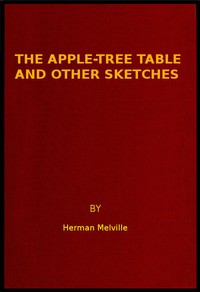
The Apple-Tree Table, and Other Sketches — Reading Companion
6
1
Project Gutenberg
2017
Short stories, American; American fiction -- 19th century
Readers of public-domain and historical texts
Project Gutenberg digital edition
en
Edition facts
Words: 65,216
Reading time: 284 min
Text sections: 6
Source:
Project Gutenberg record #53861
This collection of Herman Melville's magazine pieces from 1850-1856 showcases his distinctive diction, ironic voice, and descriptive precision across sketches ranging from a haunted table to bachelor refuges. The author's word choices and structural contrasts reveal a writer experimenting with tone and perspective.
Editorial Edition Score
4.7/5
★★★★★
★★★★★
Calculated from edition completeness, EPUB availability, text structure and catalogue metadata. Not a user rating.
Edition quality
Melville's prose in these sketches is marked by a deliberate, almost architectural accumulation of detail. In "The Apple-Tree Table," the narrator describes the table as having "two plain features... significant of conjurations and charms—the circle and tripod," immediately grounding the supernatural in the physical. The description of the garret as "a very old garret of a very old house in an old-fashioned quarter of one of the oldest towns in America" uses repetition to build atmosphere. This attention to the specific, the worn, and the oddly precise recurs throughout the collection.
In "The Paradise of Bachelors and the Tartarus of Maids," Melville contrasts the Temple's "soft seclusion" with a later industrial landscape. The diction shifts from leisurely enumeration—"The church and cloisters, courts and vaults, lanes and passages, banquet-halls, refectories, libraries"—to a starker register. These authorial choices in vocabulary and sentence rhythm shape the reader's experience of each setting.
Diction and the Supernatural Ordinary
Melville often invests mundane objects with an uncanny charge through precise, unexpected word choices. The apple-tree table is "dingy and dusty," set with "broken, be-crusted old purple vials and flasks" and a "ghostly, dismantled old quarto." The adjectives be-crusted and dismantled suggest decay and ritual. The table's legs "sprawled out into three crooked legs, terminating in three cloven feet"—the verb sprawled gives the furniture a living, almost demonic quality. Melville does not simply call it old; he calls it "a very satanic-looking little old table." The accumulation of modifiers—satanic-looking, little, old—creates a voice that is both playful and eerily serious. This technique appears elsewhere: in "Jimmy Rose," a character is described with similar layering of homely and strange details, grounding the fantastic in the tactile.
Structural Contrasts and Ironic Pairings
The collection's most striking structural device is the juxtaposition of two sketches under one title: "The Paradise of Bachelors and the Tartarus of Maids." The first half luxuriates in the Temple's "soft seclusion," with long, cataloguing sentences that mimic the leisurely pace of bachelor life. Melville enumerates "banquet-halls, refectories, libraries, terraces, gardens, broad walks, domicils, and dessert-rooms" in a breathless list. The second half, by contrast, shifts to a terse, grim description of a paper mill. The word Tartarus signals a descent. This pairing is not merely thematic but rhetorical: the same authorial voice that can celebrate "genial hospitalities" can also render industrial labor with stark economy. The contrast is embedded in the prose itself, not just the subject matter.
The Voice of the Narrator as Character
Melville's narrators often intrude with self-aware asides that shape the reader's trust. In "The Apple-Tree Table," the narrator admits he did not "very vehemently contradict" rumors that the garret was haunted, since it helped him buy the house cheaply. This confession of mild dishonesty colors everything that follows. In "The Paradise of Bachelors," the narrator addresses the reader directly: "Ah! when I bethink me of the sweet hours there passed... my heart only finds due utterance through poetry; and, with a sigh, I softly sing, 'Carry me back to old Virginny!'" The ironic deflation—singing a popular song after such lofty sentiment—reveals a narrator who undercuts his own earnestness. This tonal instability is a deliberate authorial choice, making the reader question the reliability of every emotional claim.
Recurring Motifs and Verbal Echoes
Certain words and images recur across sketches, creating a cohesive verbal texture. The word snug appears in "The Paradise of Bachelors" to describe "the snug cells of bachelors" and in "The Apple-Tree Table" to describe the garret's isolation. Old is repeated obsessively: "old garret," "old house," "old-fashioned quarter," "oldest towns." This repetition builds a sense of layered time. The motif of the circle—the table's round slab, the tripod's three legs—echoes in the "honeycomb of offices and domicils" and the "perforated" cheese simile. Melville's descriptive habit is to circle around an object, adding detail upon detail until it becomes almost mythic. These verbal echoes reward close reading and suggest a writer attentive to the music of his own prose.
Readers attentive to Melville's word choices will find that each sketch rewards slow, careful reading. Notice how he varies sentence length—from the sprawling lists of the bachelor paradise to the clipped observations of the maids' world. The author's punctuation, preserved here, often creates a staccato rhythm that mirrors his ironic or unsettling tones. These pieces are best approached not as stories with conventional plots but as performances of a distinctive voice, one that finds the strange in the familiar and the comic in the grim.
Reader reflection
How did this book work for you?
Your answers remain private and are stored only in this browser.
Your progress
0
/
10
2
How did the book work for you overall?
3
Would you pass this book on to a friend?
4
How demanding did the text feel?
5
How personally connected did you feel to the book?
6
Was the book moving at the right speed?
7
How valuable was this book for your own interests?
8
How understandable was the text?
9
What changed or sharpened your thinking?
10


![Cover of Stepping backwards [Night watches, Part 5.] — Context and Discussion](https://eqopi.com/storage/media/covers/pg12155.jpg)
![Cover of The vigil [Night watches, Part 8.] — Key Ideas to Explore](https://eqopi.com/storage/media/covers/pg12158.jpg)