1

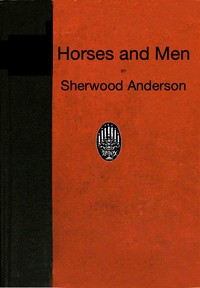
Horses and Men: Tales, long and short, from our American life — Text and Context
11
2
Project Gutenberg
2019
Short stories, American; American fiction -- 20th century
Readers of public-domain and historical texts
Project Gutenberg digital edition
en
Edition facts
Words: 102,457
Reading time: 446 min
Text sections: 20
Source:
Project Gutenberg record #60097
Sherwood Anderson's 1923 collection of tales, prefaced by a foreword on the difficulty of grasping experience, includes a story about a young man's encounter with a German farmer's wife, told with attention to gesture, silence, and the limits of language.
Editorial Edition Score
4.9/5
★★★★★
★★★★★
Calculated from edition completeness, EPUB availability, text structure and catalogue metadata. Not a user rating.
Edition quality
Sherwood Anderson's Horses and Men opens with a foreword that sets the collection's central preoccupation: the difficulty of truly touching or knowing an object, a person, or an experience. Using the metaphor of an apple—its form, fragrance, and feel—Anderson questions whether his own hands, described as "nervous and tremble," can reach through darkness to grasp what is real. This self-conscious, almost tactile uncertainty pervades the tales that follow.
The collection's first narrative, "Dreiser," immediately demonstrates this approach. Anderson describes Theodore Dreiser as "very, very old" and uses a story within a story—a friend's account of a night in Ohio—to explore how two people can unite in a way that "was not personal, that concerned their two bodies and at the same time did not concern their bodies." The telling emphasizes gesture, shadow, and the power of oral storytelling over printed words.
The Foreword as a Key to Anderson's Method
The foreword to Horses and Men is not a conventional introduction but a manifesto of sensory uncertainty. Anderson writes of an apple on a table, first wanting to eat it, then becoming absorbed in its fragrance, and finally finding himself unable to touch it at all. "My hands went toward the object of my desire and then came back," he says. This hesitation—the reaching and withdrawing—becomes a model for how the stories approach their subjects. Anderson admits he may be "blind" and "deaf," his hands nervous. The foreword thus frames the collection as an attempt to feel for "the form of things concealed in the darkness," a phrase that echoes through the tales' settings and character interactions.
Oral Storytelling and the Limits of Print
In the tale of Tom and the German farmer's wife, Anderson explicitly contrasts oral and written narrative. He notes that "story-tellers of old times" had an advantage over modern writers because they could modulate their voices and make gestures, carrying "conviction simply by the power of their own conviction." The printed word, he implies, lacks this embodied force. The story itself is told secondhand: Anderson heard it from his friend, who experienced it. This layered telling emphasizes the gap between event and representation. The friend's face and the woman's face "drew nearer each other" in the darkness, but the crucial moment—a kiss, a clasping of hands—is rendered in spare, almost hesitant prose, as if the writer is feeling his way toward the truth.
Light, Shadow, and the Gesture of the Lantern
Anderson's descriptive choices in the Ohio tale rely heavily on visual contrast and small physical details. The encounter takes place "in the heavy shadows by a barn," with the characters pressing against the barn wall. When the German husband appears at the kitchen door with a lantern, the light creates "a little circle of light outside of which he could see nothing." This lantern becomes a narrative device: it saves the situation by limiting the husband's vision, allowing the wife and Tom to slip away. Anderson lingers on the act of lifting the woman over a fence, the two figures as "dim shadows flitting along the dark wall." Such moments—precise, understated—carry the story's emotional weight without explicit commentary.
The Puzzle of Human Connection
Throughout the excerpted tale, Anderson resists easy explanation. The friend, Tom, is "puzzled" by everything that happened that night, and later "worked out a kind of explanation of it—as all men will do in such cases." But the story itself does not provide that explanation. Instead, it presents the encounter as a union that "was not personal," something that "has to be felt, not understood with the thinking mind." Anderson's prose mirrors this: he offers concrete images—hands clasped, bodies against a wall, a woman answering her husband "quietly, as she had always answered him"—but refuses to interpret them. The reader is left, like Tom, with a sense of something significant that remains just out of reach.
Readers approaching Horses and Men should attend to the spaces between words: the pauses, the gestures, the moments when characters stand in silence or shadow. Anderson's foreword warns that his hands may tremble, and his stories often proceed by indirection, circling around experiences that resist direct statement. The collection rewards those who read slowly, noticing how a lantern's light or a clasped hand can carry more meaning than any declaration. These are tales that ask not what happened, but how it felt to be there, in the dark, reaching for something real.
Reader reflection
How will you remember this book?
Save your reaction, strongest insight, and memorable passage.
Your progress
0
/
10
2
How much did you enjoy the reading experience?
3
Would you encourage someone else to read it?
4
Did the language feel accessible?
5
Did anything about the book feel genuinely new?
6
How much did the book move you?
7
Did the book deliver what you hoped for?
8
Would you like to discuss this book with someone?
9
What is the main idea you are taking away?
10

![Cover of Keeping watch [Night watches, Part 2.] — Story, Setting & Ideas](https://eqopi.com/storage/media/covers/pg12152.jpg)
![Cover of The understudy [Night watches, Part 3.] — A Closer Reading](https://eqopi.com/storage/media/covers/pg12153.jpg)