1

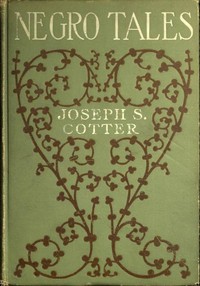
Negro Tales — Background and Themes
10
1
Project Gutenberg
2012
Short stories, American; African Americans -- Fiction
Readers of public-domain and historical texts
Project Gutenberg digital edition
en
Edition facts
Words: 31,629
Reading time: 138 min
Text sections: 4
Source:
Project Gutenberg record #41590
Cotter's 1912 collection blends folk motifs, dialect, and moral irony in tales of African American life, from parables to realist sketches, revealing a distinctive narrative voice.
Editorial Edition Score
4.5/5
★★★★★
★★★★★
Calculated from edition completeness, EPUB availability, text structure and catalogue metadata. Not a user rating.
Edition quality
The opening tale, "Caleb," plunges the reader into a violent family confrontation. Patsy and Benjamin discuss their two weddings—one as slaves, one as free people—and their son Caleb, who enters and strikes his father dead. The stark dialogue, "We have been blessed in the number of our weddings," said she. "Yes; but cursed in Caleb," he replied, sets a tone of moral gravity. The author's preface, by Thomas G. Watkins, frames Cotter as a self-taught educator who rose from manual labor, lending the tales an autobiographical weight.
Violence and Moral Consequence
In "Caleb," the son's patricide is immediate and unsoftened: "Caleb, with a parting sneer, left the room, while Patsy ran to the aid of her husband." The tale does not dwell on motive; instead, it presents the act as a curse made manifest. Later, in "The Stump of a Cigar," a similar abrupt violence occurs when a character is struck down. Cotter uses these moments to explore moral collapse without explicit judgment, letting the narrative's starkness speak. The reader is left to infer the social and familial pressures that lead to such acts, as the excerpts provide only the consequences, not the backstory.
Dialect and Narrative Voice
Cotter employs dialect selectively, often in dialogue, to distinguish characters' voices. In "A Rustic Comedy," characters speak in vernacular: "Look," said the stranger, "what I have done for you." The narrator, however, uses standard English, creating a layered perspective. This technique allows Cotter to present folk wisdom and cunning—as when the stranger outwits a thief—while maintaining a detached, almost pedagogical tone. The dialect is not uniform; some tales, like "The Jackal and the Lion," use fable-like language, while others, like "A Town Sketch," lean toward realist description. This variety suggests Cotter was experimenting with different modes of representing African American speech and experience.
Deception and Theft as Narrative Engines
Several tales revolve around trickery and stolen goods. In the excerpt from an untitled story, a stranger helps a couple catch a thief but may be deceiving them himself. The dialogue reveals a philosophical bent: "a thief is by honor as a criminal is by his chains." The stranger's elaborate explanation of why the thief left bundles in the meal barrel shows Cotter's interest in the psychology of deceit. Similarly, "How Mr. Rabbit Secures a Pretty Wife and Rich Father-in-Law" adapts the trickster tradition. These episodes often hinge on a character's ability to manipulate perception, making the reader question who is truly in control.
Fable and Realism Side by Side
The collection juxtaposes animal fables with gritty domestic scenes. "The Jackal and the Lion" and "The King's Shoes" draw on folkloric structures, while "Caleb" and "A Town Sketch" present harsh realities of post-slavery life. This mix suggests Cotter was bridging oral tradition and literary fiction. The fables often carry explicit morals—"The Little Boy and Mister Dark" ends with an observation—while the realist tales leave judgment ambiguous. Readers should note how the tone shifts: the fables are lighter, the sketches more somber. This contrast may reflect Cotter's own dual role as educator and storyteller, aiming both to entertain and to instruct.
Cotter's tales reward attention to narrative framing: the preface by a white editor, the author's own rise from poverty, and the recurring motifs of violence and deception. Readers may find it useful to compare the fables with the realist pieces, noting how each mode handles moral questions. The dialect and dialogue demand careful reading, as characters often speak in proverbs or riddles. Approach the collection as a series of experiments in voice and form, rather than a unified novel, and let the contradictions—between folk wisdom and harsh reality—guide your interpretation.
Reader reflection
Record your reading impressions
A brief reflection can help important ideas stay with you longer.
Your progress
0
/
10
2
How did the book work for you overall?
3
Would you pass this book on to a friend?
4
Did the language feel accessible?
5
Was the book easy to understand?
6
What did you appreciate most?
7
How did the pace of the book feel?
8
Did it raise ideas you would like to talk about?
9
What is the main idea you are taking away?
10
![Cover of Keeping watch [Night watches, Part 2.] — Story, Setting & Ideas](https://eqopi.com/storage/media/covers/pg12152.jpg)
![Cover of The understudy [Night watches, Part 3.] — A Closer Reading](https://eqopi.com/storage/media/covers/pg12153.jpg)