1

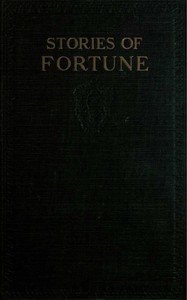
Stories of Fortune — Background and Themes
8
0
Project Gutenberg
2015
Short stories; Luck -- Fiction
Readers of public-domain and historical texts
Project Gutenberg digital edition
en
Edition facts
Words: 61,561
Reading time: 268 min
Text sections: 6
Source:
Project Gutenberg record #48696
This collection of six stories by authors including Poe, Hawthorne, and Edgeworth explores luck and fortune through characters like Murad the Unlucky and Saladin the Lucky, with settings from Sullivan's Island to Constantinople.
Editorial Edition Score
4.7/5
★★★★★
★★★★★
Calculated from edition completeness, EPUB availability, text structure and catalogue metadata. Not a user rating.
Edition quality
The six stories in this collection, edited by Rossiter Johnson, share a preoccupation with luck and fortune, but the excerpts reveal that the catalog subject "Luck -- Fiction" captures only part of their range. In Poe's "The Gold-Bug," the narrator describes Sullivan's Island with precise botanical detail—"a dense undergrowth of the sweet myrtle"—and introduces Legrand, a man of "unusual powers of mind" given to "alternate enthusiasm and melancholy." The story's opening establishes a naturalist's eye for setting and a psychological interest in the protagonist's character, not merely a plot about finding treasure.
Fortune as a Narrative Engine
In Maria Edgeworth's "Murad the Unlucky," the title character laments his misfortunes in a speech that catalogues a series of disasters, culminating in the explosion of a vase. His brother Saladin, by contrast, is called "Saladin the Lucky" and attributes his confidence to that label. The excerpts show that fortune functions less as a theme than as a structural device: Murad's complaint prompts Saladin to tell his own history, creating a frame narrative. The text does not reveal whether the brothers' reputations match their experiences; the reader only sees Murad's account of his bad luck and Saladin's willingness to console him. The story's interest lies in how characters use the idea of fortune to explain events and to shape their identities.
Setting and Character in Poe's Contribution
The opening of "The Gold-Bug" devotes considerable space to the geography and vegetation of Sullivan's Island, noting the "scarcely perceptible creek" and the "bristly palmetto." This attention to physical detail grounds the story in a specific locale. The narrator describes Legrand as "well educated, with unusual powers of mind, but infected with misanthropy" and notes his "perverse moods." The excerpts do not advance the plot beyond the introduction of Legrand and his companion Jupiter, but they establish a character whose intelligence and instability may be relevant to the story's events. The catalog subject "Short stories" accurately reflects the format, but the excerpts suggest that Poe's story is as much about a particular place and a particular mind as about the pursuit of fortune.
The Frame of the Collection
The table of contents lists six stories, each by a different author, ranging from Poe to Hawthorne to Edward Everett Hale. The excerpts from "Murad the Unlucky" include a frame in which the sultan and his vizier pose as merchants and listen to Murad's tale, then hear Saladin's history. This nested structure mirrors the collection itself: a series of stories about fortune, each with its own narrative frame. The editor Rossiter Johnson does not appear in the excerpts, but his selection of authors—including the Irish writers Samuel Lover and John Banim—suggests a deliberate variety of voices. The excerpts do not reveal how the stories connect or whether they share a unifying perspective on luck, but the presence of multiple frames invites the reader to compare how different authors handle the same motif.
Readers approaching this collection should attend to how each story defines fortune—whether as a force, a label, or a narrative convenience. The excerpts offer no resolution to the characters' fates, so the interest lies in the telling: the precise settings, the characters' self-conceptions, and the frames that contain them. The catalog subjects provide a starting point, but the stories themselves reward attention to voice and structure.
Reader reflection
Your personal reading reflection
Build a private reading journal entry for this title.
Your progress
0
/
10
2
Was reading this book enjoyable?
3
Would you recommend this book to another reader?
4
Did the language feel accessible?
5
Was the book moving at the right speed?
6
Did it raise ideas you would like to talk about?
7
Could you see yourself revisiting this book?
8
How clearly were the main ideas presented?
9
What did this book teach you most?
10


![Cover of Keeping watch [Night watches, Part 2.] — Story, Setting & Ideas](https://eqopi.com/storage/media/covers/pg12152.jpg)
![Cover of The understudy [Night watches, Part 3.] — A Closer Reading](https://eqopi.com/storage/media/covers/pg12153.jpg)