1

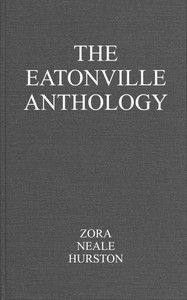
The Eatonville anthology — Themes and Context
15
3
Project Gutenberg
2025
Short stories, American; African Americans -- Fiction
Readers of public-domain and historical texts
Project Gutenberg digital edition
en
Edition facts
Words: 7,635
Reading time: 34 min
Text sections: 2
Source:
Project Gutenberg record #75183
Zora Neale Hurston's 1926 collection of fourteen sketches and folktales set in the all-Black town of Eatonville, Florida, blending sharp social observation with vernacular humor and a concluding animal fable.
Editorial Edition Score
4.4/5
★★★★★
★★★★★
Calculated from edition completeness, EPUB availability, text structure and catalogue metadata. Not a user rating.
Edition quality
In the first sketch, “The Pleading Woman,” Mrs. Tony Roberts works a systematic circuit of Eatonville, begging for food she does not need. Her keening refrain—“Tony doan’ fee-ee-eed me!”—is a performance that the storekeeper and neighbors see through, yet they comply. Hurston renders the scene with precise dialogue and gesture: the pleading woman “superintends the cutting” of salt pork, crying out in mock pain when the knife does not move far enough. The sketch is less a moral tale than a study of a social role—the town’s “pleading woman”—and the grudging, amused tolerance she receives.
Marriage, Money, and Misfortune
Several sketches turn on the odd bargains of married life. In “Turpentine Love,” Jim Merchant remains in good humor with his wife even after she has lost all her teeth; their bond was sealed when a dose of turpentine, spilled accidentally into her eye during a fit, cured her permanently. The story is told flatly, without irony, as if such a cure were unremarkable. Elsewhere, Becky Moore has eleven children by various fathers and has never married, “but that is not her fault.” Hurston’s narratorial voice is dry, leaving the reader to gauge the gap between the town’s judgment and the facts. Money, too, is a thread: Tony Roberts is “the best provider on his list,” yet his wife begs; the pleading woman’s husband gives her “all he can rake and scrape,” but she still works her rounds. The sketches accumulate a picture of domestic economies that are both practical and theatrical.
Voice and Vernacular on the Porch
Hurston’s Eatonville is a place where talk is action. The store porch is a stage: men sit, watch, and bet on the outcome of a marital showdown. When Mitch Potts buys a box “very much like a shoe-box” and heads for the piney woods, his wife Cal’line follows with an axe, and the porch “set to giggling and betting.” The dialogue is rendered in a carefully transcribed vernacular that signals status and intent. The pleading woman’s “sing-song” keening, Mitch’s “fancy cussing,” and the animal fable’s formal courtship speeches all occupy different registers. The fable, “Once ’way back yonder before the stars fell,” shifts into a mock-heroic tone: Dog and Rabbit court Miss Nancy Coon with elaborate proposals (“which would you ruther be—a lark flyin’ or a dove a settin’?”). The variety of voices—from aggrieved wife to boastful husband to polite rabbit—gives the collection its texture.
The Fable as Final Word
The anthology closes with a talking-animal story, a genre Hurston would later develop more fully. Rabbit offers to “fix” Dog’s voice to make it sweeter, a promise that the reader suspects is a trick. The fable is told in a different key from the preceding sketches: its characters are types (the sweet-voiced Dog, the scheming Rabbit, the coy Miss Coon), and its language is formalized folk speech. Placing it at the end suggests that the town’s human dramas are continuous with older storytelling traditions. The fable’s outcome is not given in the excerpt, but its presence frames the whole collection as a blend of reportage and invention. Hurston does not explain the connection; she lets the juxtaposition stand.
Because the excerpts cover only a portion of the fourteen sketches, the reader encounters Eatonville in fragments—a pleading woman, a cured fit, a wife with an axe, a rabbit with a scheme. The anthology rewards attention to recurring patterns: the gap between what people say and what they do, the social function of complaint, and the way a town watches its own. Hurston’s ear for speech and her refusal to moralize make these sketches feel like field notes from a place that is both real and invented.
Reader reflection
What did you think of this book?
Answer a few questions and save a private reflection on this device.
Your progress
0
/
10
2
How did the book work for you overall?
3
Would you encourage someone else to read it?
4
How much effort did this book require?
5
Did anything about the book feel genuinely new?
6
How much did the book move you?
7
Would this book work well in a reading group?
8
Would you read this book again?
9
What did this book teach you most?
10

![Cover of Keeping watch [Night watches, Part 2.] — Story, Setting & Ideas](https://eqopi.com/storage/media/covers/pg12152.jpg)
![Cover of The understudy [Night watches, Part 3.] — A Closer Reading](https://eqopi.com/storage/media/covers/pg12153.jpg)