1

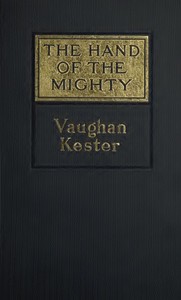
The Hand of the Mighty, and Other Stories — Background and Themes
5
1
Project Gutenberg
2016
Short stories, American; American fiction -- 20th century
Readers of public-domain and historical texts
Project Gutenberg digital edition
en
Edition facts
Words: 100,814
Reading time: 439 min
Text sections: 11
Source:
Project Gutenberg record #52563
This editorial note examines Vaughan Kester's diction, dialogue, and descriptive choices in a 1913 story collection, focusing on how characters' speech and narrative voice convey social dynamics and humor.
Editorial Edition Score
4.8/5
★★★★★
★★★★★
Calculated from edition completeness, EPUB availability, text structure and catalogue metadata. Not a user rating.
Edition quality
Vaughan Kester's 1913 collection The Hand of the Mighty, and Other Stories opens with a biographical sketch by his brother Paul, which sets a personal tone before the fiction begins. The stories themselves reveal a writer attentive to the rhythms of spoken language and the nuances of social hierarchy. In the excerpt from “Mr. Feeny's Social Experiment,” for instance, the character Feeny delivers a monologue dense with mock-economic jargon: “the elimination of haphazard methods of distribution” and “common carriers for the good of all.” This blend of folksy idiom and pseudo-formal speech creates a comic tension that recurs across the volume.
Dialogue as Social Barometer
Kester uses dialogue not merely to advance plot but to signal class and education. In the Feeny story, the character's speech is peppered with malapropisms and invented logic: “I've vaccinated this coal-heavin' bunch with this here political economy serum.” The contrast between Feeny's vernacular and Mr. MacCandlish's indignant “I denounce this as an iniquitous outrage!” highlights a clash of worlds. Kester often lets characters reveal themselves through their word choices—Feeny's “b'ys” and “p'int out” versus MacCandlish's clipped “Bridge!”—without authorial commentary. This technique, visible in the excerpt, suggests a broader pattern in the collection where dialogue carries the weight of characterization.
Narrative Voice and Ironic Distance
The third-person narrator in the Feeny excerpt maintains a dry, observational stance. When the “stout brother-in-law” laughs at the hotel sign, a “hostile glance from the eye of a friend” silences him. Kester lets the scene's absurdity speak for itself, rarely underlining the joke. The description of the “St. Murphy-Feeny. European Plan” tent, with its salvaged awnings, is rendered in matter-of-fact prose that amplifies the humor. This restrained narrative voice—neither mocking nor sentimental—appears consistent across the stories, allowing readers to gauge the irony without being told how to feel. Kester trusts his dialogue and detail to do the work.
Recurring Motifs: Salvage and System
In the Feeny story, the shipwreck survivors repurpose wreckage into a makeshift economy: “Corrigan's gone into the poultry business with them turtles,” and “O'ara's adopted the oyster beds.” This motif of salvage—turning disaster into enterprise—echoes the collection's title story, “The Hand of the Mighty,” where power dynamics are similarly renegotiated. Kester's characters often improvise systems of order, whether through Feeny's “system” of distribution or the hotel's “scale of prices.” The word “system” appears twice in Feeny's speech, suggesting a thematic thread: the human impulse to impose structure on chaos, often with comic or ironic results.
Diction and the Vernacular Tradition
Kester's ear for regional and class-based speech places him in the American vernacular tradition. Feeny's line “I little thought, Mr. MacCandlish, sir, I'd have to p'int out to you of all men the fairness of this arrangement” combines folksy contraction (“p'int”) with mock-deferential address. The exaggerated politeness (“sir”) undercuts the speaker's authority even as he asserts control. Elsewhere, the narrator notes that MacCandlish and his party are “too busy playing poker” to manage their own needs—a detail that underscores the story's critique of idle wealth. Kester's diction choices, from Feeny's “bouncin'” to MacCandlish's “piracy,” create a linguistic landscape where every word signals allegiance or opposition.
Readers approaching The Hand of the Mighty, and Other Stories will find a writer who favors implication over explanation. Kester's dialogue and descriptive details reward close attention: a character's turn of phrase or a seemingly minor object—like a sign with “letters two feet high”—can carry the story's weight. The collection's eleven stories, spanning varied settings and situations, share a consistent authorial voice that is both amused and unsentimental. Let the characters speak for themselves; Kester has given them the words.
Reader reflection
How will you remember this book?
Save your reaction, strongest insight, and memorable passage.
Your progress
0
/
10
2
Was reading this book enjoyable?
3
Would you recommend this book to another reader?
4
How easy was the book to follow?
5
How did the pace of the book feel?
6
Could you see yourself revisiting this book?
7
Did the book give you something worth debating?
8
How strongly did the book affect you emotionally?
9
What did this book teach you most?
10

![Cover of Stepping backwards [Night watches, Part 5.] — Context and Discussion](https://eqopi.com/storage/media/covers/pg12155.jpg)
![Cover of The vigil [Night watches, Part 8.] — Key Ideas to Explore](https://eqopi.com/storage/media/covers/pg12158.jpg)