1

Dig me no grave — Edition Insights
11
0
Project Gutenberg
2023
Short stories; Horror tales
Readers of public-domain and historical texts
Project Gutenberg digital edition
en
Edition facts
Words: 8,220
Reading time: 36 min
Text sections: 1
Source:
Project Gutenberg record #71066
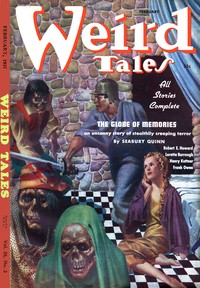
Robert E. Howard's 'Dig Me No Grave' opens with a midnight visit, a corpse, and a ritual reading that plunges narrator Kirowan into supernatural horror. The story's power lies in its mounting dread, cryptic incantations, and the eerie presence of a silent oriental figure.
Editorial Edition Score
4.4/5
★★★★★
★★★★★
Calculated from edition completeness, EPUB availability, text structure and catalogue metadata. Not a user rating.
Edition quality
The story begins not with the death of old John Grimlan, but with the aftermath: a friend's urgent midnight knock, a narrator roused from nightmare-haunted sleep, and a confession that the death was 'the most fearful I have ever seen.' Howard establishes unease through physical detail—trembling hands, unnatural pallor, a voice 'shaky and strained.' The opening paragraphs layer explanations: hereditary taint, obscure Eastern diseases, a refusal of medical aid. Yet the very abundance of rationalizations hints at something beyond reason.
By the time Conrad produces a sealed envelope of instructions for a ritual to be read over the corpse, the reader, like Kirowan, is primed for horror. The story's structure—a frame narrative of a man reading an ancient document—creates a vertiginous sense of nested dread.
The Architecture of Dread
Howard builds horror through incremental sensory detail. The narrator notes that the candles go out 'one by one' despite no draft stirring the 'heavy black hangings.' Each extinguished flame marks a step deeper into the uncanny. The silent oriental at the head of the table, whose eyes burn with 'devilish triumph,' never moves or speaks, yet his presence amplifies the terror. Howard withholds action, letting the ritual itself become the threat.
The incantation, rendered in archaic English and 'barbaric gibberish,' shifts between comprehensible threats—'ye Prince of Darkness taketh hys due'—and alien syllables that trigger a 'cold hand of terror' in the narrator. This alternation keeps the reader off-balance, never sure which language carries the real danger.
The Weight of the Past
John Grimlan's backstory is sketched through implication: he 'pried about in the mysterious parts of the earth,' wandered the East, and suffered seizures described as 'writhings, howlings and yammerings' that made him seem 'possessed by demons.' The parchment he leaves behind dates to 1680, signed 'John Grymlann,' suggesting a pact made centuries ago. The story hints at a bargain for 'ryches & knowledge beyond countinge & lyffe beyond mortal span'—a deal now coming due.
Howard never confirms whether Grimlan's affliction is disease, demonic possession, or the consequence of a literal contract. The ambiguity is deliberate: the horror lies in the possibility that all three explanations might be true.
Voice and Unreliable Narration
Kirowan, the first-person narrator, is a witness, not a hero. He admits to being 'dimly aware' of Conrad's voice droning on, and his perceptions grow distorted: 'the candles grew dim in my gaze and the room and its occupants swam strange and monstrous.' His fear paralyzes him—'I could not speak, I could not move'—making him a passive recorder of events he cannot control.
This narrative stance heightens the uncertainty. Are the supernatural events real, or is Kirowan's terror-induced hallucination? The story never breaks frame to confirm. The reader, like the narrator, is trapped inside the room as the candles go out.
The Unseen Threat
Howard's horror relies on what is not shown. The 'Elder ones' and the 'Darke Lord whose face is hidden' are described only through the incantation. The 'strange shadows' that 'glide among the sonnes of men' leave tracks but are never seen. The story's climax—if it occurs—happens beyond the excerpts, in the darkness after the last candle goes out.
This restraint is effective: the reader's imagination supplies worse terrors than any description could. The silent oriental, the locked doors, the failing lights—all point toward an ending that the narrative refuses to deliver, leaving the horror suspended.
Readers approaching 'Dig Me No Grave' should attend to Howard's use of incremental repetition—the candles, the droning voice, the narrator's mounting paralysis. The story rewards attention to its layered voices: the modern frame, the archaic parchment, the alien tongue. The horror is not in the events but in the waiting. Let the darkness gather.
Reader reflection
How will you remember this book?
Save your reaction, strongest insight, and memorable passage.
Your progress
0
/
10
2
Was reading this book enjoyable?
3
Would you pass this book on to a friend?
4
How demanding did the text feel?
5
What did you think about the pace?
6
Was the book what you thought it would be?
7
How distinctive were its ideas or approach?
8
Did it raise ideas you would like to talk about?
9
What did this book teach you most?
10
![Cover of Keeping watch [Night watches, Part 2.] — Story, Setting & Ideas](https://eqopi.com/storage/media/covers/pg12152.jpg)
![Cover of The understudy [Night watches, Part 3.] — A Closer Reading](https://eqopi.com/storage/media/covers/pg12153.jpg)